

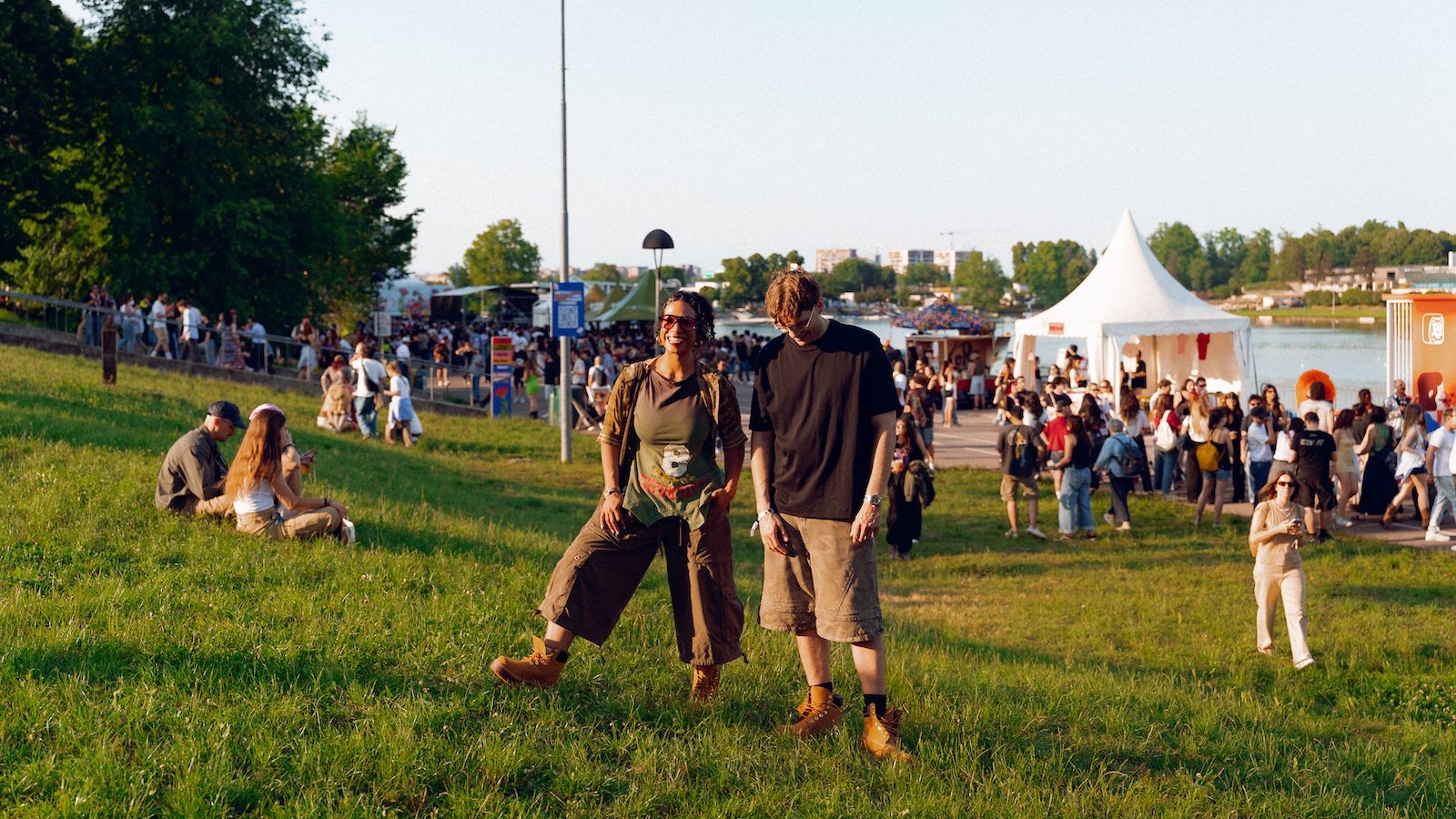
Possiamo dirlo ufficialmente: è iniziata la stagione dei festival estivi. I muri di casse sostituiscono le call, la polvere fa sfumare i codici del quotidiano e l’estetica smette di essere solo performance per diventare (anche) equipaggiamento funzionale. Ma come si negozia la libertà di esprimere la propria identità tramite ciò che indossiamo con la necessità di godersi un festival in comodità? Lo abbiamo indagato attraverso due sguardi complementari che stanno già mappando la stagione, a iniziare dal MI AMI Fest: lo street digger Jiggy, che ha condotto un’indagine sul campo per capire se sotto lo stesso palco vinca l’attitudine hip hop o quella indie; e la stylist Thais, che ha scovato la vibe pragmatica delle “girls in timbs”. Il minimo comune denominatore è l’Original Timberland Boot, scarpa-camaleonte capace di far crollare ogni barriera di genere musicale e stilistico e unire mondi apparentemente lontani. Ecco i tip che sono emersi in questa esplorazione, segnateveli per avere tutto ciò che serve per godervi appieno i festival in arrivo nei prossimi mesi.
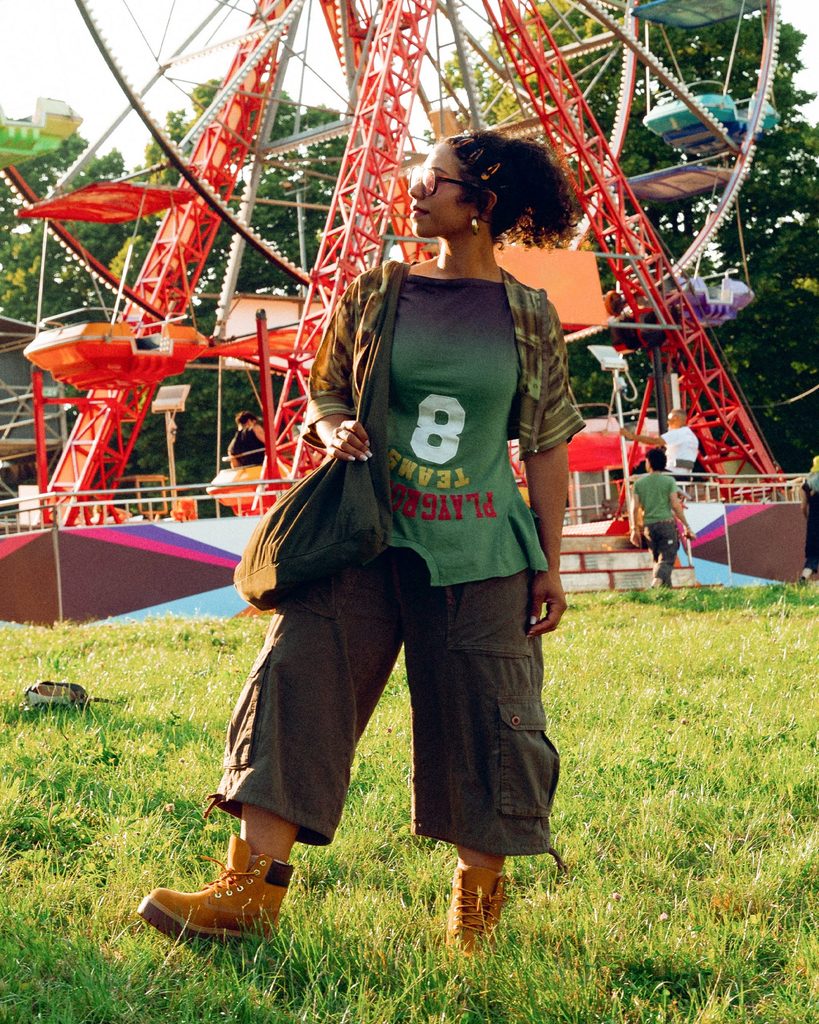
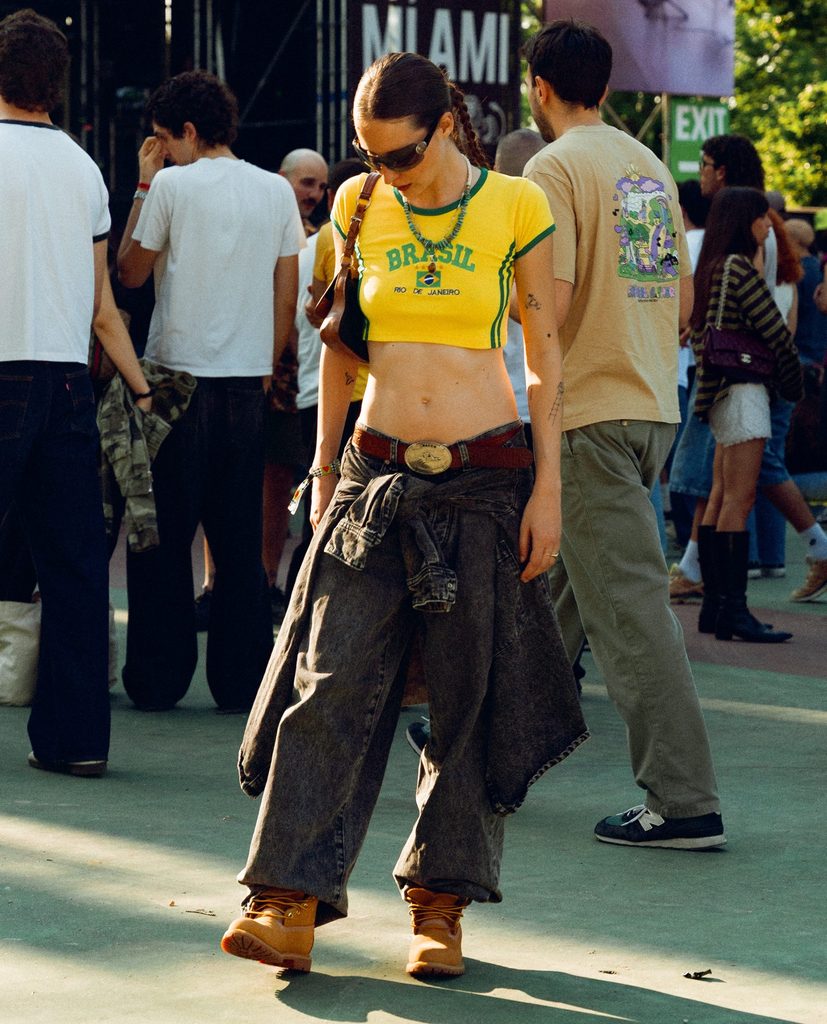

Stiamo assistendo a festival europei che mescolano sempre più i generi – il rock con l’urban, lo shoegaze con l’hip hop. In che modo questa fluidità e versatilità influisce anche sugli outfit e le estetiche dei festival?
Jiggy: La versatilità di un capo influisce molto. Negli ultimi anni abbiamo assistito a un incontro e ibridazione tra generi diversi, e di riflesso anche l’estetica delle relative scene si è evoluta. La cosa che mi piace dei festival è il fatto di poter vedere insieme archetipi di persone che in passato non si sarebbero mai incontrate, gasate e unite con unico intento: godersi la musica.
Thais: Oggi i festival sono spazi ibridi, non più “tribù” chiuse, e l’estetica segue questa contaminazione. Se un tempo ogni scena aveva un’uniforme rigida – il rock, il rap, la techno –, ora tutto si mescola: riferimenti shoegaze, hardcore e trap convivono sullo stesso palco, rendendo i look fluidi e meno codificati. Si passa con naturalezza da elementi utility a dettagli romantici, fino a reference Y2K. Le persone costruiscono un immaginario personale prendendo codici da mondi diversi. La Gen Z ha influenzato tantissimo questo approccio, attingendo ovunque senza gerarchie tra subculture o epoche. È un mix and match spontaneo amplificato dai social, dove tutto è accessibile: puoi scoprire nello stesso momento un archivio anni ’90 o una scena underground coreana, e trasformarli in un’estetica intuitiva. Il tutto con una consapevolezza nuova, attenta anche alle problematicità della cultural appropriation. L’outfit diventa così parte dell’esperienza visiva e narrativa del festival: più libero, stratificato e profondamente personale.
Nei festival l’estetica smette di essere puro styling e si trasforma in funzionalità: polvere, fango, cambi di temperatura radicali. In questo, le scarpe che indossi diventano fondamentali. Qual è la caratteristica del footwear ideale per affrontare un festival? E qual è il gadget che non può mancare nel tuo kit da festival estivo?
Jiggy: Versatilità. Il meteo, come la vita, è imprevedibile e ai piedi si ha bisogno di qualcosa che possa andare bene per tutto. Gadget che non può mancare per me: la sacoche.
Thais: Il footwear ideale da festival deve tenere insieme due elementi: resistenza e identità visiva. Passi ore in piedi tra polvere, pioggia e fango, quindi la comodità è fondamentale, ma serve una scarpa che faccia davvero parte del look e dell’attitudine che vuoi trasmettere. Per questo modelli iconici come lo Yellow Boot funzionano così bene: hanno una struttura solida, ma sono anche un linguaggio estetico trasversale capace di muoversi tra streetwear e cultura underground senza perdere autenticità. Nel kit estivo gli essenziali non cambiano: occhiali da sole, salviette, power bank, una felpa per lo sbalzo termico serale e una borraccia. Stay hydrated, sempre.
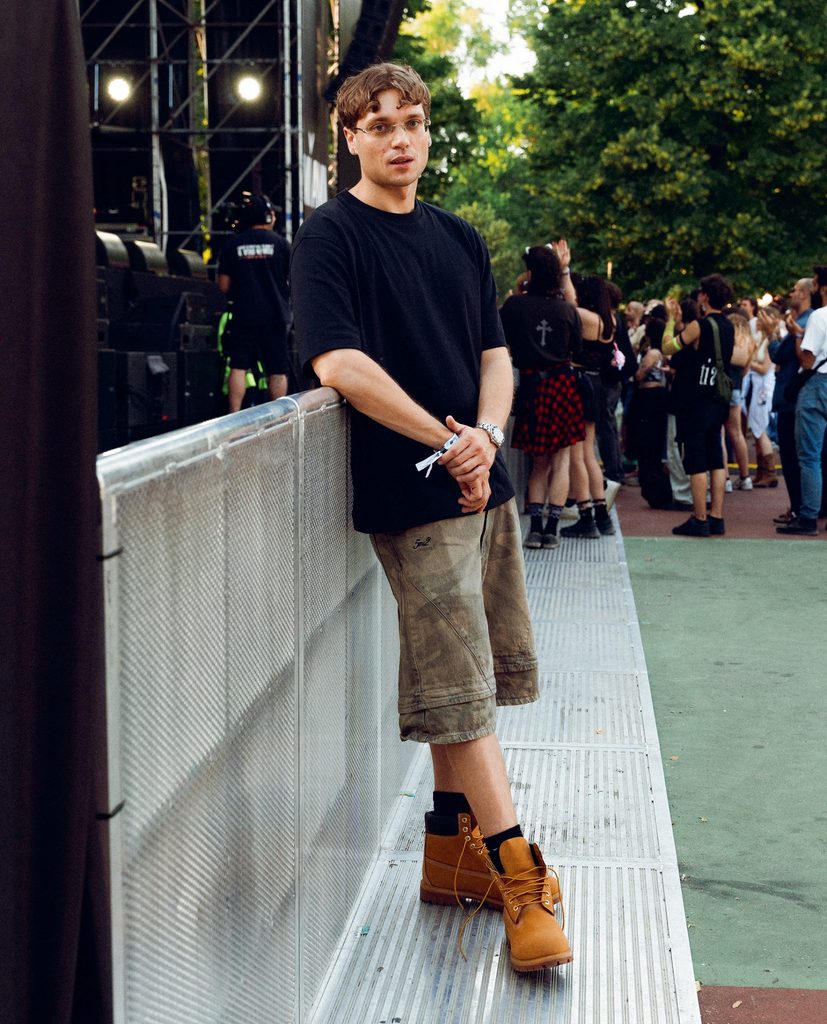
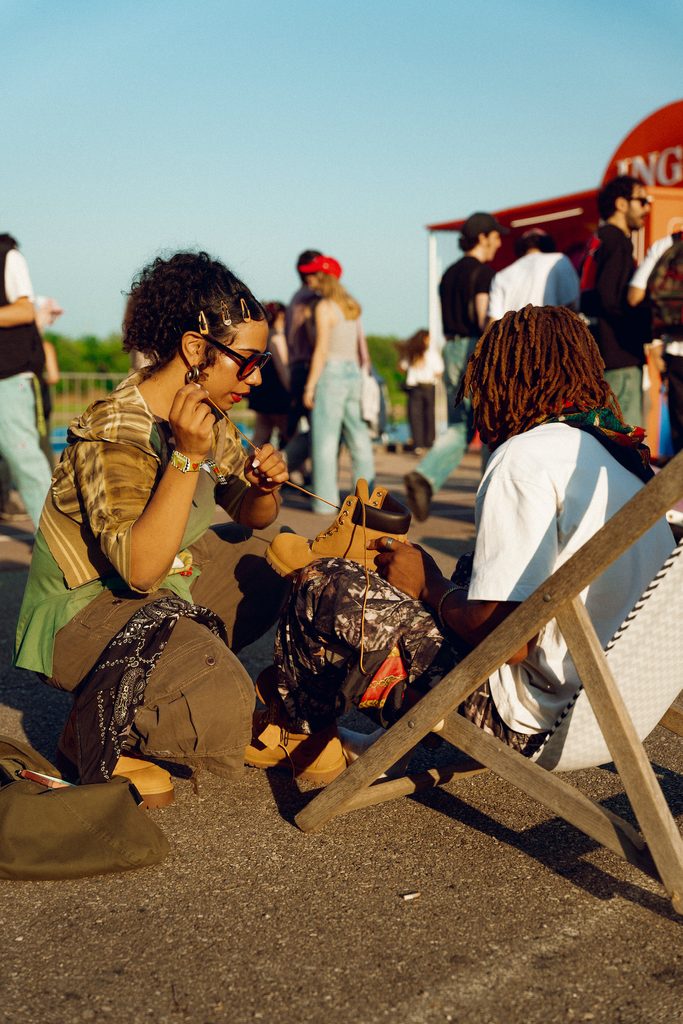
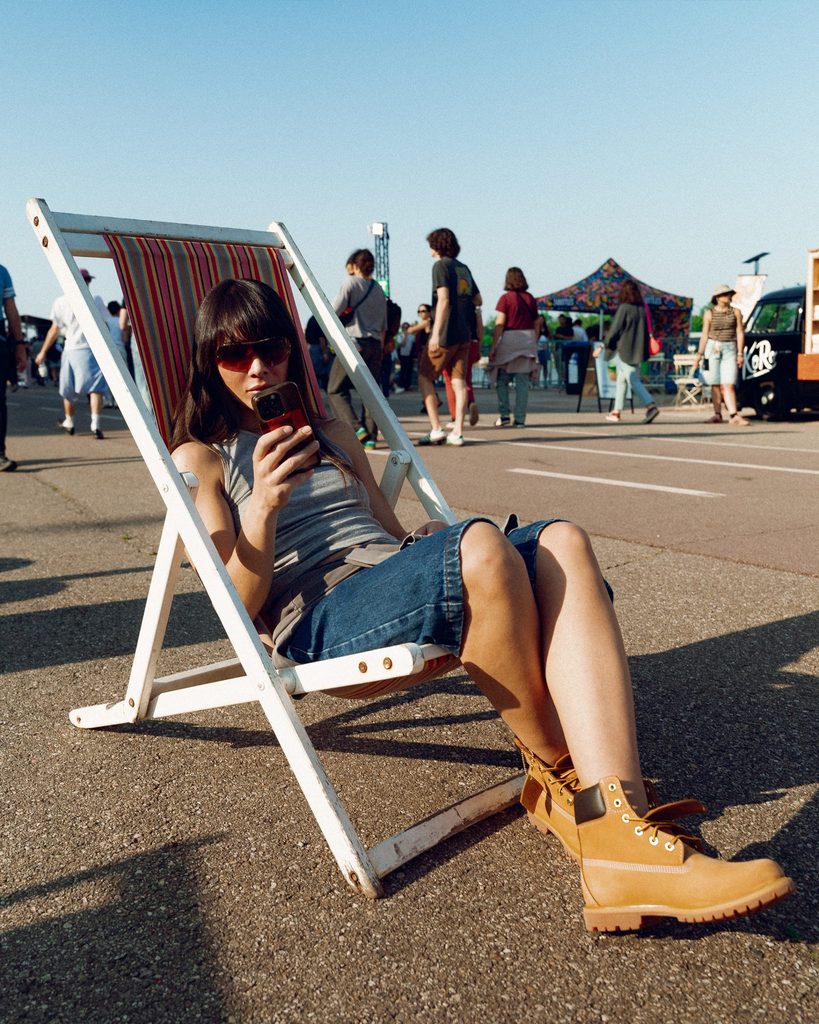
Spesso, un capo o un accessorio indossato in loop durante un’estate intera finisce per storicizzare una fase o un momento preciso della nostra vita, trasformandosi in un attivatore di memoria – anche sonora. Qual è questo oggetto per te?
Jiggy: Le graphic tees dei rapper, le ho sempre indossate d’estate e ai festival, ci sono molto affezionato.
Thais: Per me quell’indumento è senza dubbio il crop top. Belly out! È il simbolo del primo sole: quando lo tiro fuori dall’armadio, la stagione della libertà è ufficialmente iniziata. Mi accompagna da sempre e si è trasformato in una specie di archivio emotivo. Ne ho uno legato a ogni fase della mia vita, dalle vecchie serate dancehall, hip hop e trap fino ai festival più selezionati di oggi. La cosa bella è che ogni pezzo si porta dietro un ricordo musicale preciso: una playlist, un periodo, volti e atmosfere di un’estate specifica. Moda e musica sono un connubio inseparabile; certi capi diventano vere e proprie capsule di memoria sonora.
Indie o hip hop? Ti aspettavi che l’Original Timberland Boot, una calzatura storicamente legata a una cultura così specifica (urban/rap) fosse diventata a tutti gli effetti un fattore di riconoscimento anche per chi ascolta tutt’altro?
Jiggy: No, non me l’aspettavo ma è stato interessante riscontrarlo dal vivo. Lo Yellow Boot è una scarpa che varia molto in base a come la rocki, e le sue declinazioni sono come le mosse che puoi fare durante una partita di scacchi: pressochè infinite.
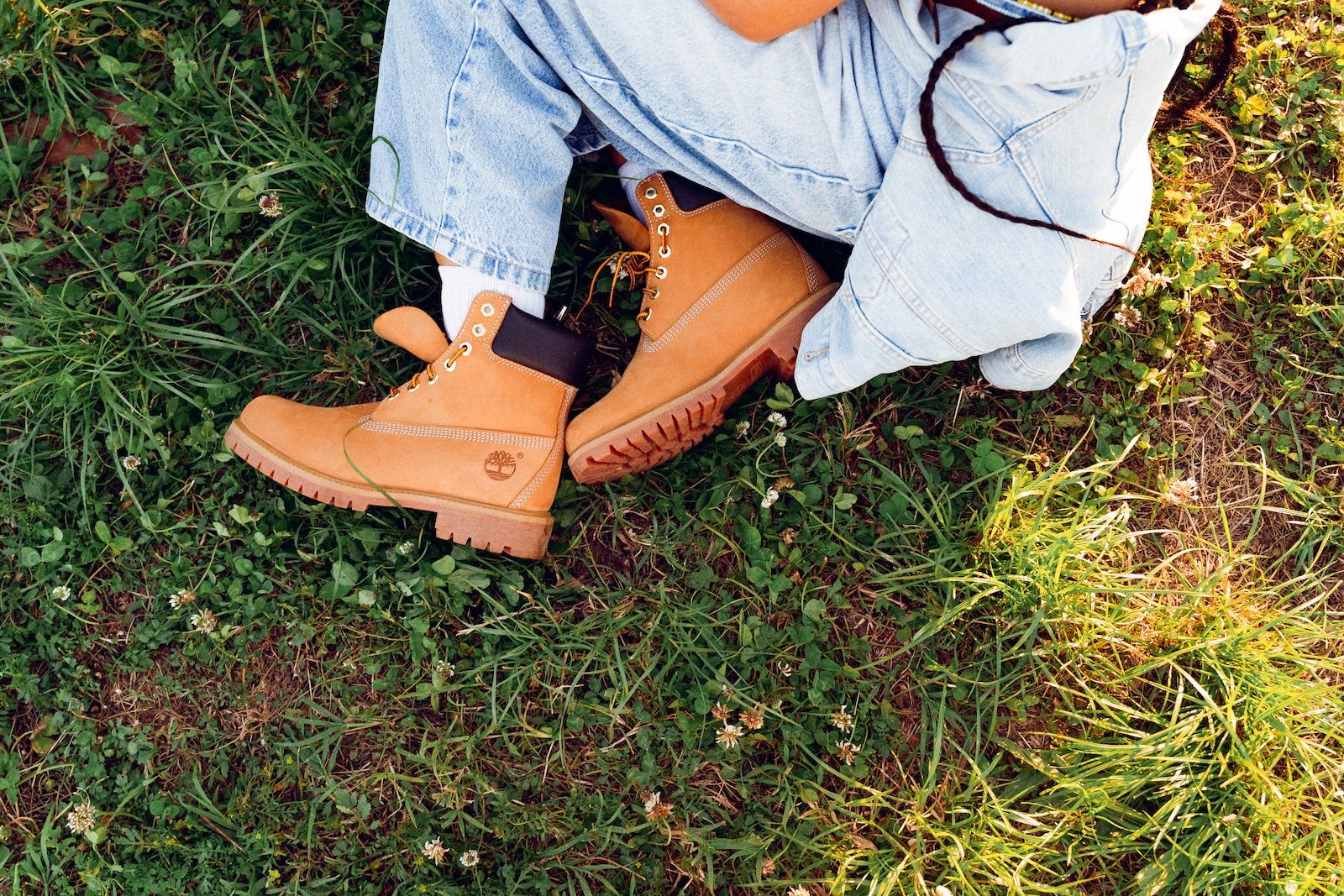
Chi mastica cultura hip hop sa che la ricerca filologica – che sia di un vinile, di un beat o di un pezzo d’archivio – è tutto. Nel marasma dei festival commerciali di oggi, come si riconosce a prima vista un vero digger urbano all’interno della calca sottopalco?
Jiggy: Dall’estetica di una persona capisci subito quanto ci tiene, quanto è appassionata, lo si può notare da un dettaglio o dall’insieme del tutto. Secondo me, questa dinamica è rimasta simile a come funzionava negli anni ’10: all’epoca riconoscevi subito un altro “rappuso” da come era vestito, lo stesso vale ancora oggi per un intenditore.
L’hip hop ha sempre preso elementi funzionali e li ha risignificati, trasformando in icona ciò che era nato per scopi puramente pragmatici. Quanto c’è di quell’attitudine originaria nel modo in cui le nuove generazioni oggi reinterpretano il Boot di Timberland – che sia in contesti urban, rock o crossover?
Jiggy: È rimasta tanto quell’attitudine, ancora oggi. Le persone rockano il Boot in modo diverso da come lo portava Tupac, per esempio, ed è proprio questo il bello secondo me: l’evoluzione. Che forse è la componente più importante all’interno della vita di una persona. I tempi cambiano, ma l’iconicità resta.
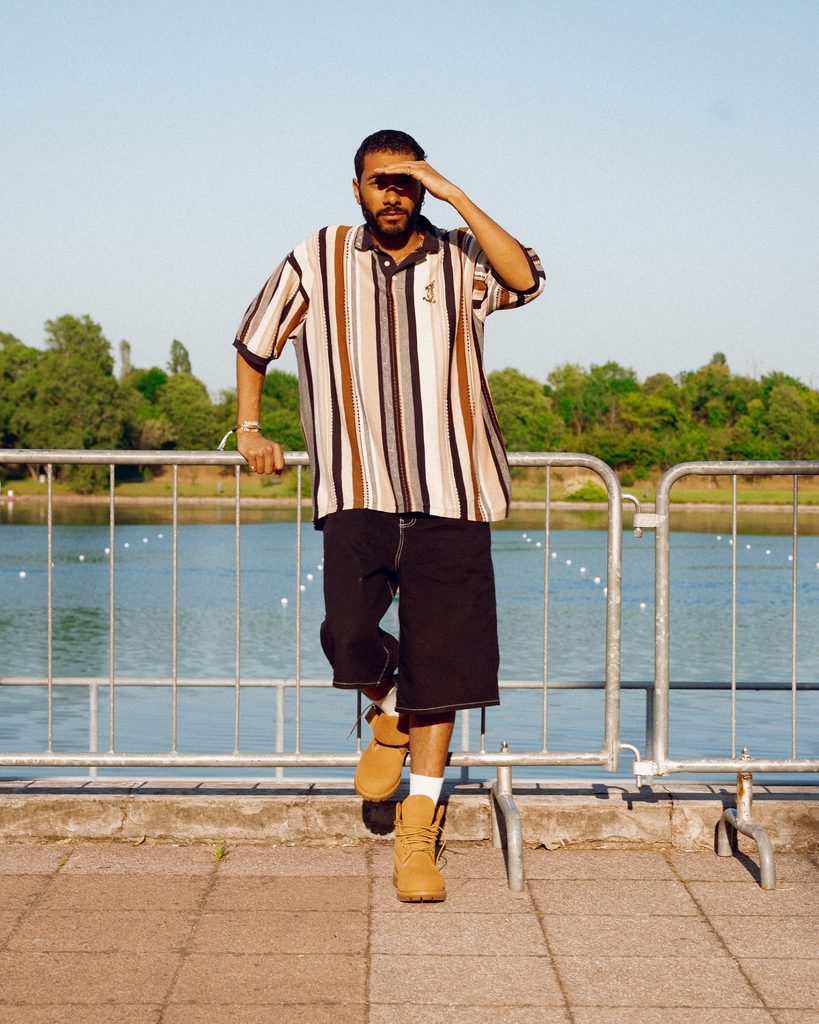
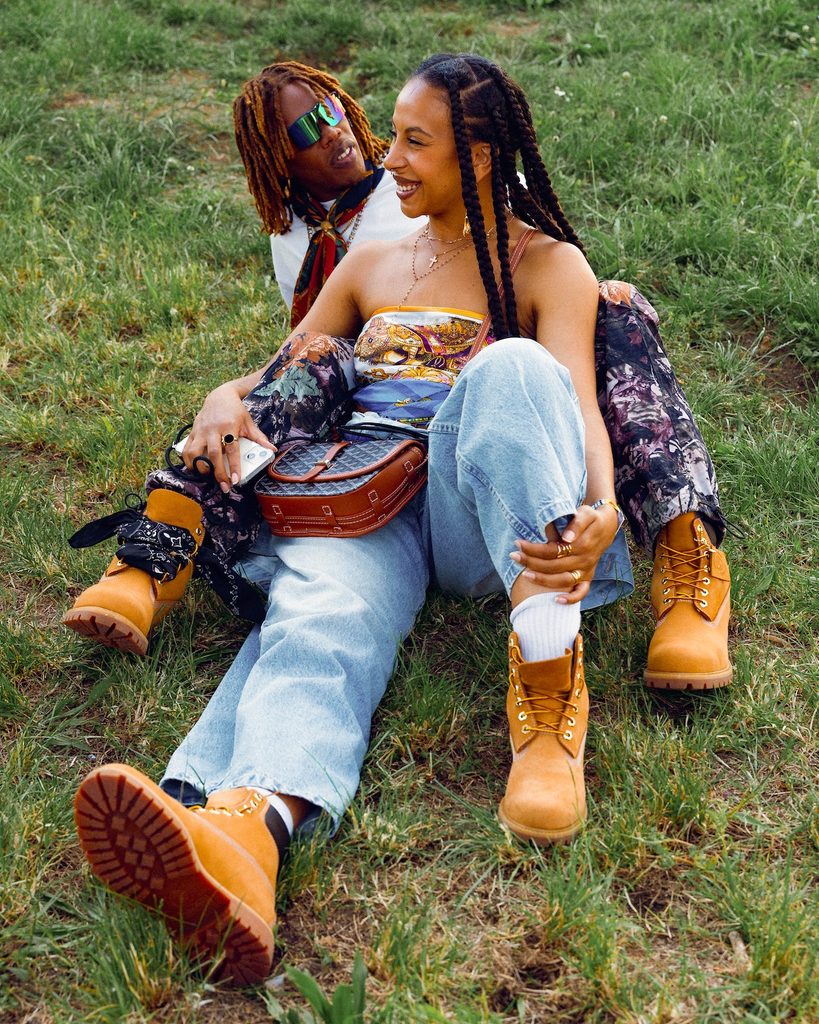
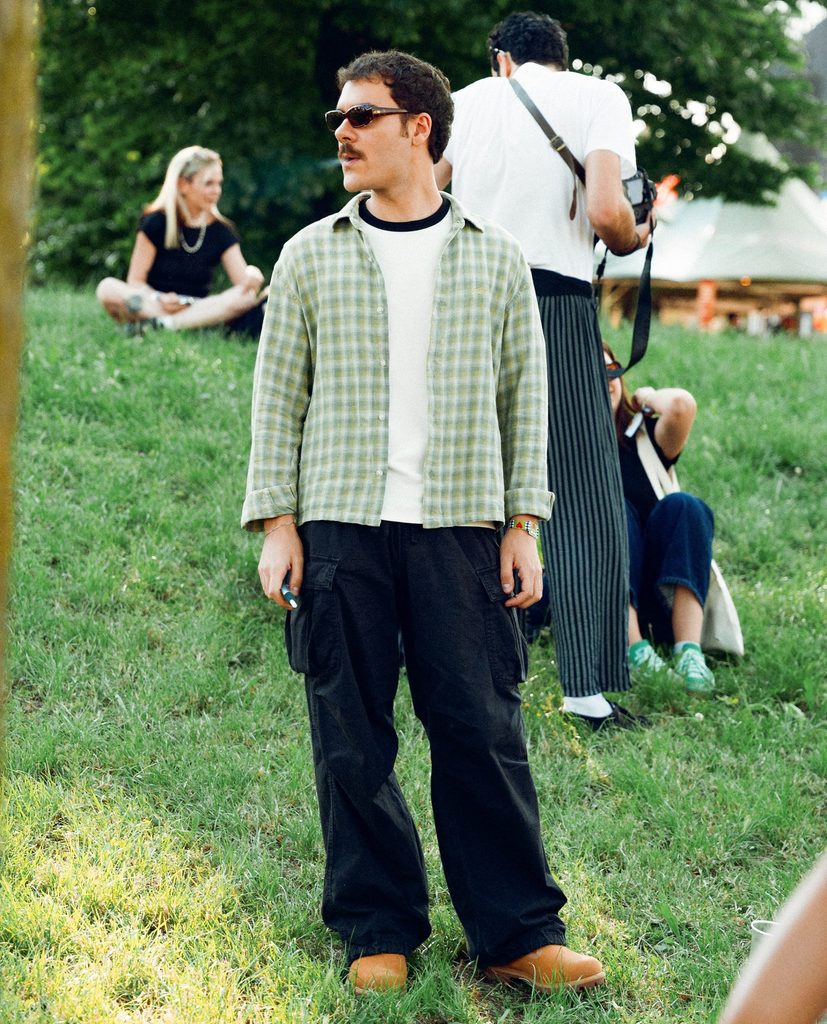
Nella nostra guida abbiamo analizzato quattro direzioni estetiche precise. Da stylist, come si progetta una silhouette layered che deve funzionare esteticamente ma che deve anche resistere a situazioni atmosferiche “scomode”?
Thais: Costruire una silhouette layered significa trovare un equilibrio tra estetica, movimento e funzionalità reale. I gilet, ad esempio, sono versatili e geniali, anche se su di me faccio ancora fatica a vederli. Fondamentale è poi una scarpa impermeabile fatta bene, totalmente mud-coded: passarsi la serata con i piedi bagnati cambia il mood in negativo esponenzialmente. Ultimamente ho rivalutato le felpe con la zip divisibile, perfette per stratificare e mettere in evidenza i layer inferiori, e il ritorno di gonne o vestiti sopra i pantaloni. Lì però bisogna stare attenti a non creare l’effetto “malloppo” nei punti sbagliati: il portamento è la vera chiave. Ai festival, comunque, possiamo anche fregarcene della perfezione assoluta del look. Alla fine il vero focus resta la musica e la condivisione collettiva.
Nelle tue idee di outfit da festival, lo Yellow Boot interviene come elemento di rottura, una base solida che radica e dà stabilità a tessuti leggeri, trasparenze neo-ethereal o volumi oversize anni Duemila. Dal punto di vista dello styling, qual è il valore di una scarpa così strutturata?
Thais: Amo i contrasti: inserire elementi “disturbanti” rende i look vivi e tridimensionali. Mi piace quando un accessorio sembra decontestualizzato rispetto alla silhouette, perché crea un piccolo cortocircuito visivo. È quell’effetto “errore controllato” che rompe la lettura immediata del look e lo rende più istintivo. Inserire un elemento tecnico o una scarpa strutturata come le Timberland – che si porta dietro un retaggio culturale potente – in un contesto leggero o romantico cambia completamente la narrazione. Lo styling per me è questo: creare tensione, non armonia perfetta. Inserire piccole dissonanze che costringono l’occhio a tornare sul look e a rileggerlo ogni volta in modo diverso.
Stiamo assistendo a una transizione verso stili come gorpcore e acid utility (Gore-Tex, nylon ripstop, layer termici). Come interpreti questo bisogno di un abbigliamento così tecnico e, in qualche modo, protettivo per andare ad ascoltare musica rispetto a una modalità molto più spontanea e avventuriera che storicamente ha caratterizzato l’ambiente dei festival?
Thais: Il fenomeno del gorpcore ha una forte valenza estetica e sociale. Vive in un cortocircuito: da un lato c’è l’immaginario della montagna e dell’avventura, dall’altro una realtà urbana fatta di uffici e coworking. Il technical wear si inserisce qui: è abbigliamento da esplorazione indossato in contesti non più selvaggi, ma in cui si vuole mantenere dinamismo. Il capo tecnico diventa una specie di “armatura soft” che permette di abitare l’esperienza del festival senza subirla. Non cancella la dimensione avventurosa del festival, la aggiorna. Rispetto al passato, dove l’approccio era più naïf, oggi c’è una consapevolezza diversa: si vuole essere pronti a tutto, senza perdere l’identità estetica. Il tecnico non è freddo, è una forma di protezione espressiva.
EN
Experimentation and functionality: a guide to the new festival aesthetics
Which category do you belong to? And would the people who meet you think the same? We explored these and other festival dynamics with street digger Jiggy and stylist Thais Montessori Brandao, discovering how the Yellow Boot is a versatile element capable of bridging even the most distant worlds.
We can officially say it: summer festival season has begun. Walls of speakers replace calls, dust blurs the codes of everyday life, and aesthetics stop being just performance and become (also) functional gear. But how do we negotiate the freedom to express our identity through what we wear with the need to actually enjoy a festival comfortably? We investigated this through two complementary perspectives already mapping out the season, starting with MI AMI Fest: street digger Jiggy, who conducted field research to understand whether hip hop or indie attitude wins under the same stage; and stylist Thais, who uncovered the pragmatic vibe of the “girls in timbs.” The common denominator is the Original Timberland Boot, a chameleon-like shoe capable of breaking down barriers of musical genre and style while uniting seemingly distant worlds. Here are the tips that emerged from this exploration — take note if you want everything you need to fully enjoy the festivals coming up in the next few months.
We’re seeing European festivals increasingly blending genres — rock with urban music, shoegaze with hip hop. How does this fluidity and versatility also influence festival outfits and aesthetics?
Jiggy: The versatility of a garment has a huge impact. In recent years we’ve witnessed an encounter and hybridization between different genres, and naturally the aesthetics of those scenes have evolved as well. What I love about festivals is seeing archetypes of people together who would have never crossed paths in the past, all hyped up and united by one shared goal: enjoying the music.
Thais: Today festivals are hybrid spaces, no longer closed “tribes,” and aesthetics follow this contamination. In the past every scene had a rigid uniform — rock, rap, techno — whereas now everything blends together: shoegaze, hardcore, and trap references coexist on the same stage, making looks fluid and less codified. People naturally move from utility elements to romantic details, all the way to Y2K references. They build a personal imaginary by borrowing codes from different worlds. Gen Z has massively influenced this approach, pulling references from everywhere without hierarchies between subcultures or eras. It’s a spontaneous mix-and-match amplified by social media, where everything is accessible: you can discover a ’90s archive and a Korean underground scene at the same time and turn them into an intuitive aesthetic. All of this comes with a new awareness, especially around issues of cultural appropriation. Outfits therefore become part of the visual and narrative experience of the festival: freer, more layered, and deeply personal.
At festivals, aesthetics stop being pure styling and become functionality: dust, mud, radical temperature shifts. In this context, the shoes you wear become fundamental. What’s the ideal footwear characteristic for surviving a festival? And what’s the one gadget that can’t be missing from your summer festival kit?
Jiggy: Versatility. Weather, like life, is unpredictable, and on your feet you need something that works for everything. The essential gadget for me: a sacoche bag.
Thais: The ideal festival footwear has to combine two elements: durability and visual identity. You spend hours standing in dust, rain, and mud, so comfort is essential, but you also need a shoe that truly becomes part of the look and the attitude you want to communicate. That’s why iconic models like the Yellow Boot work so well: they have a solid structure, but they’re also a cross-cultural aesthetic language capable of moving between streetwear and underground culture without losing authenticity. The summer essentials never change: sunglasses, wipes, a power bank, a hoodie for the evening temperature drop, and a water bottle. Stay hydrated, always.
Often, a garment or accessory worn repeatedly during an entire summer ends up historicizing a phase or specific moment in our lives, becoming a memory trigger — even a sonic one. What object is that for you?
Jiggy: Rapper graphic tees. I’ve always worn them in summer and at festivals, and I’m very attached to them.
Thais: For me that item is definitely the crop top. Belly out! It’s the symbol of the first sunshine: the moment I pull it out of the closet, the season of freedom has officially started. It’s always been with me and has become a sort of emotional archive. I have one linked to every phase of my life, from old dancehall, hip hop, and trap nights to today’s more curated festivals. The beautiful thing is that each piece carries a precise musical memory: a playlist, a period, faces and atmospheres from a specific summer. Fashion and music are inseparable; certain garments become real capsules of sonic memory.
Indie or hip hop? Did you expect the Original Timberland Boot, historically linked to such a specific culture (urban/rap), to become a recognizable marker even for people listening to completely different genres?
Jiggy: No, I didn’t expect it, but it was interesting to witness it firsthand. The Yellow Boot is a shoe that changes a lot depending on how you rock it, and its variations are like the moves you can make during a chess game: practically endless.
Anyone familiar with hip hop culture knows that philological research — whether it’s for a vinyl, a beat, or an archival piece — is everything. Amid today’s chaos of commercial festivals, how can you instantly recognize a true urban digger in the crowd?
Jiggy: From a person’s aesthetic you immediately understand how much they care, how passionate they are. You can notice it through a detail or through the overall picture. In my opinion, this dynamic remains similar to how it worked in the 2010s: back then you could instantly recognize another “rap head” from the way they dressed, and the same still applies today for true insiders.
Hip hop has always taken functional elements and re-signified them, transforming things created for purely pragmatic purposes into icons. How much of that original attitude remains in the way younger generations reinterpret the Timberland Boot today — whether in urban, rock, or crossover contexts?
Jiggy: A lot of that attitude is still there today. People rock the Boot differently from how Tupac used to wear it, for example, and that’s exactly what makes it beautiful to me: evolution. Which is probably the most important component in a person’s life. Times change, but iconic status remains.
In our guide we analyzed four distinct aesthetic directions. As a stylist, how do you design a layered silhouette that works visually but can also survive uncomfortable weather conditions?
Thais: Building a layered silhouette means finding a balance between aesthetics, movement, and real functionality. Vests, for example, are versatile and genius, even though I still struggle to see them on myself. A well-made waterproof shoe is also fundamental, something completely mud-coded: spending the evening with wet feet exponentially ruins the mood. Recently I’ve re-evaluated zip-up hoodies, which are perfect for layering and highlighting the layers underneath, as well as the comeback of skirts or dresses over pants. There, however, you need to be careful not to create a bulky “bundle” effect in the wrong areas: posture is the real key. At festivals, though, we can also stop obsessing over absolute perfection. In the end, the real focus remains the music and the collective experience.
In your festival outfit ideas, the Yellow Boot acts as an element of disruption, a solid base grounding lightweight fabrics, neo-ethereal transparencies, or oversized Y2K volumes. From a styling perspective, what’s the value of such a structured shoe?
Thais: I love contrasts: inserting “disturbing” elements makes looks feel alive and multidimensional. I like when an accessory feels out of context within a silhouette because it creates a small visual short circuit. It’s that “controlled mistake” effect that breaks the immediate reading of a look and makes it more instinctive. Introducing a technical element or a structured shoe like Timberlands — which carries a powerful cultural legacy — into a light or romantic context completely changes the narrative. Styling, for me, is exactly this: creating tension, not perfect harmony. Adding small dissonances that force the eye to return to the outfit and reinterpret it differently every time.
We’re witnessing a transition toward styles like gorpcore and acid utility (Gore-Tex, ripstop nylon, thermal layers). How do you interpret this need for such technical and, in a way, protective clothing to go listen to music, compared to the much more spontaneous and adventurous attitude that historically characterized festival culture?
Thais: Gorpcore has a strong aesthetic and social dimension. It exists within a contradiction: on one side there’s the imagery of mountains and adventure, and on the other an urban reality made of offices and coworking spaces. Technical wear fits into this space: exploration clothing worn in contexts that are no longer wild, but where people still want to maintain a sense of dynamism. Technical garments become a kind of “soft armor” that allows people to inhabit the festival experience without being overwhelmed by it. It doesn’t erase the adventurous dimension of festivals — it updates it. Compared to the past, when the approach was more naïve, today there’s a different awareness: people want to be ready for anything without losing their aesthetic identity. Technical wear isn’t cold; it’s a form of expressive protection.

